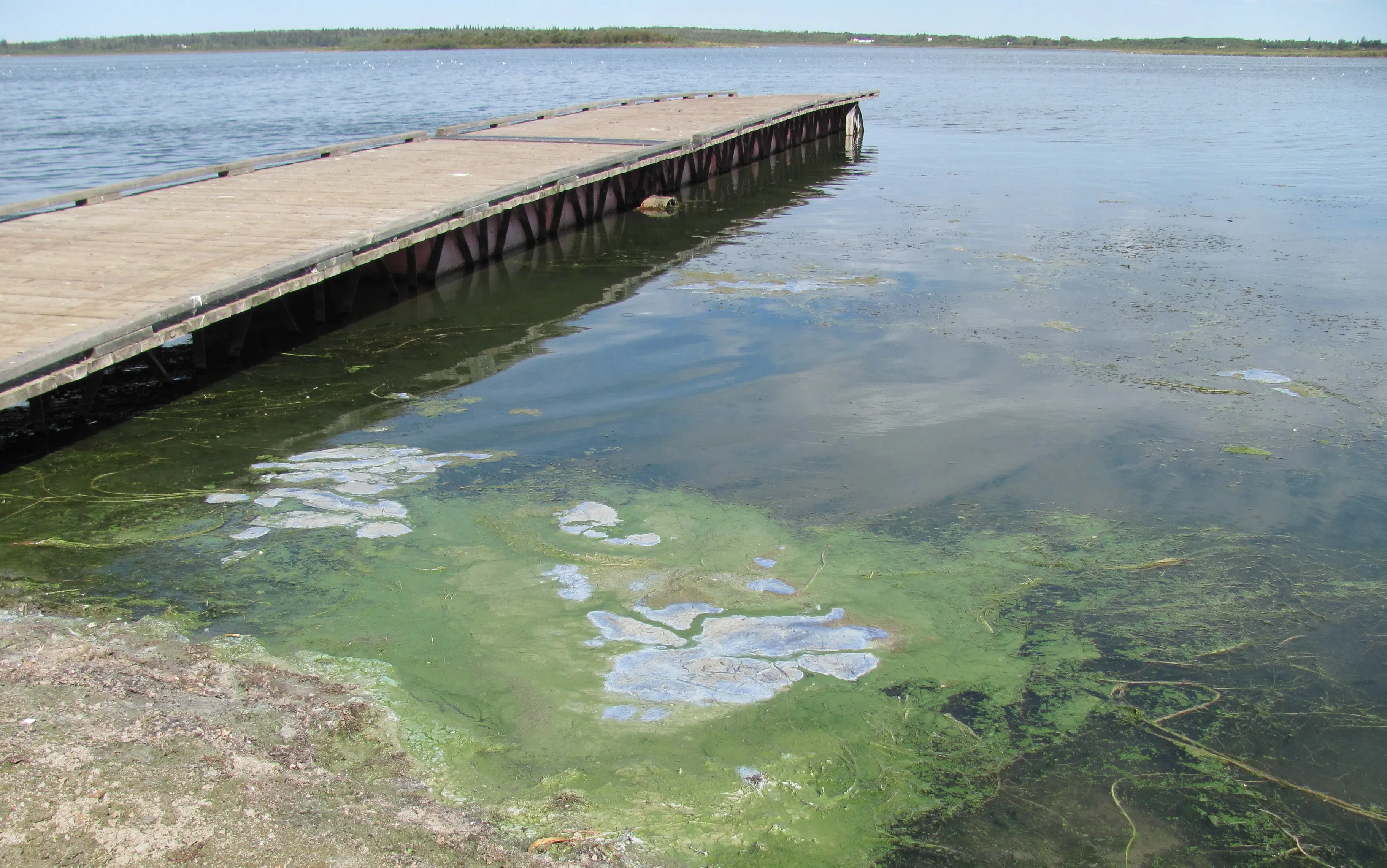
Cyanobacteria bloom at the shore of a lake. Source: Environmental Public Health, Alberta Health Services
Although algae blooms can occur throughout the year, cyanobacteria thrive in warmer conditions and are most commonly found during the summer and early fall.
“Recent weather has cooled lake and reservoir water temperatures to such an extent that cyanobacteria (blue-green algae) and water quality, including fecal bacteria levels, present a low health risk for usage of the lake for recreational purposes,” AHS said in a news release.
Cyanobacteria can appear as blue-green or brown scum or streaks on the surface of the water. The organisms can produce toxins that may cause skin rashes, sore eyes, nausea, vomiting and diarrhea. They can be found in freshwater, brackish water and saltwater environments.
The lifted advisories also include those previously issued for Alberta Beach, Moose Lake Provincial Park Beach and Stoney Lake Municipal Campground Beach.
“As always, visitors and residents are reminded to never drink or cook with untreated water directly from any lake or reservoir at any time,” AHS wrote. “Note that boiling water will not remove the toxins produced by cyanobacteria.
“An alternate source of drinking water should also be provided for pets and livestock any time cyanobacteria may be of concern.”








Comments