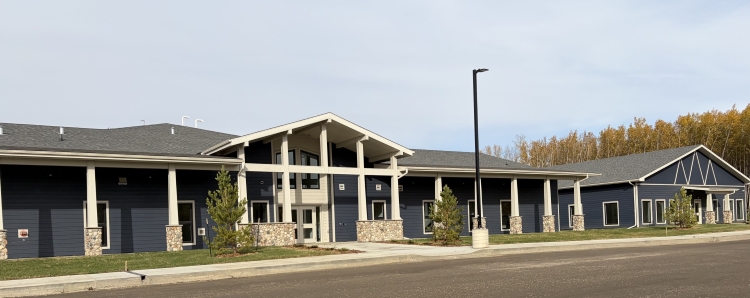
Construction is complete on the Enoch maskêkosihk Recovery Community, expanding access to no-cost, culturally grounded addiction treatment in the Edmonton area.
The new 75-bed recovery community was supported by a $35-million provincial capital investment and ongoing operating funding.
The facility will provide holistic addiction treatment for up to 300 people each year, helping more people pursue recovery close to home, surrounded by culture and community.
Developed in partnership with Enoch Cree Nation, the Enoch maskêkosihk Recovery Community is owned and managed by the Nation and will be operated in alignment with community priorities, cultural considerations, local governance and the provincial recovery community model.
It is the third of five Indigenous-led recovery communities built in Alberta.
“Recovery is possible, and every new recovery community means more people can access the support they need to reclaim their lives from addiction. We are proud to partner with Enoch Cree Nation to help more individuals heal, strengthen families and build healthier communities,” said Rick Wilson, Minister of Mental Health and Addiction.
The recovery community will support individuals in addressing substance use, building holistic wellness and developing the skills and stability needed for long-term recovery, while serving Indigenous people and others living in the Edmonton region.
Maskêkosihk Recovery Community Ltd. will deliver services that embody the Nation’s culture, ceremony, identity, family and community connections.
“We know there is no single path to recovery, but we know there is tremendous strength within our people, our culture and our spirit. Recovery is not only about healing the body. It is about healing the spirit, restoring connections to culture and family, and helping our people find hope and purpose again,” said Enoch Cree Nation Chief Cody Thomas.
“The maskêkosihk Recovery Community is an investment in our people, our families and generations yet to come. Everyone who walks through these doors deserves to know they are valued, they belong, and they are not alone.”
The first clients are expected to begin treatment this December and will have access to comprehensive, evidence-based treatment for up to one year.